Permeable Pavers: Solving Drainage Issues During Storm Season
You watched it happen again last August. The sky went dark around three in the afternoon, the rain came down in sheets, and within twenty minutes the back corner of your yard turned into a shallow pond. The water sat there for the rest of the day, drowning the grass, creeping toward the patio, and leaving a muddy ring once it finally pulled back. By the next storm, you already knew the exact spot where it would gather.
The surface itself is usually the thing nobody thinks to question.
Permeable pavers solve this by letting rainwater pass straight through the joints into a bed of loose stone below, instead of forcing it to sheet across a sealed patio or driveway and pool in the lowest part of the yard. After building and repairing these systems through more wet seasons than we care to count, the pattern holds true every time. Standing water is rarely a soil problem first. It starts with a surface that has nowhere to send the rain. Get the surface right and most of the flooding you have lived with simply stops happening.
Why the Same Spot Floods Every Storm Season
The water has nowhere to go, and that is the whole story in one sentence. A traditional sealed patio, driveway, or other hard surface sheds nearly every drop that lands on it. During a typical summer cell here, two inches of rain can fall in under an hour, and all of that volume rushes off hard surfaces toward the closest low point. Your yard cannot drink it fast enough.
Sandy soil hides the problem until it does not. People assume sand drains freely, so flooding feels like a mystery. The catch is that a hard surface never gives the rain a chance to reach that sand. It runs off the edge in a concentrated stream and overwhelms one small area instead of spreading out. Add a high water table after weeks of daily storms, and the ground is already saturated before the next downpour even starts.
Grade and compaction finish the job. Many yards settle over the years, leaving a slight bowl near the patio or along a fence line. Heavy clay pockets mixed into the sand seal off infiltration entirely. None of these show up on a dry day. The first real storm of June finds every one of them.
How Permeable Pavers Actually Move Water
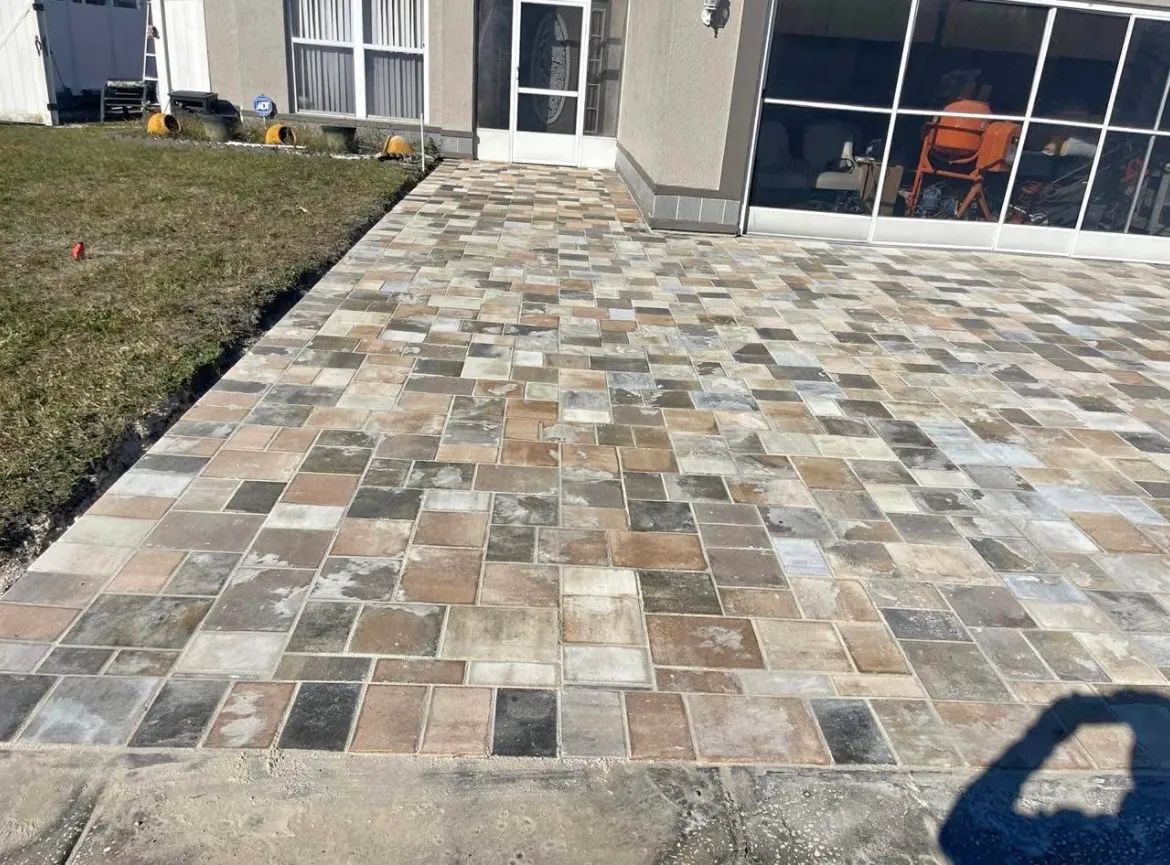
Permeable pavers work because the joints between them are gaps, not seals. Each paver sits with a wider space around it, and those spaces are filled with small angular stone chips rather than the fine sand used in a standard patio. Rain hits the surface, finds the gaps, and drops through within seconds.
Underneath sits the part that does the heavy lifting. A bed of open graded stone, usually eight to twelve inches deep, acts as a reservoir, holding the surge from a hard rain in the empty space between the rocks and releasing it slowly into the soil beneath. A layer of fabric separates the stone from the dirt so the base stays clean and keeps working. On a system built right, surface water clears within ten to fifteen minutes of a storm moving through, even when the same downpour leaves the rest of the yard flooded.
What you get is a patio or driveway that behaves like a sponge instead of a tabletop. The rain that used to pool in one corner now soaks in across the entire footprint and feeds the groundwater instead of your low spot.
Where Do It Yourself Drainage Fixes Go Wrong
Most failed drainage projects come from sealing the very gaps that are supposed to drain. Homeowners buy regular pavers, set them tight, then fill the joints with polymeric sand because it locks everything in place and stops weeds. It also turns the whole surface into a sealed lid. The water that was meant to pass through now runs off exactly like any non-permeable surface.
The base material is the other common miss. Packing standard limerock under the pavers feels solid and looks professional, but dense rock holds water rather than passing it. We have pulled up plenty of patios where the surface looked perfect and the base underneath had turned into a saturated, muddy layer that drained nothing. Skipping the fabric is a quieter mistake. Without it, soil works its way up into the stone over a season or two and slowly chokes the reservoir.
There is also the slope trap. People build a permeable surface dead flat, assuming the gaps handle everything. A gentle pitch still matters so water hitting the joints during the heaviest cells moves down into the base instead of skimming the top.
The Quiet Luxury of Going Porous
A porous patio reads as understated, and that is part of the appeal. There is no surface drain grate breaking up the stone, no visible pipe daylighting into the flower bed, no sump pump humming in the side yard. The drainage is invisible because it happens under your feet. For homeowners who want a clean, finished outdoor space that simply works, that quiet is the luxury.
It also sits well with anyone who cares where the rainwater ends up. Instead of pushing every storm into the street, a permeable system returns that water to the ground right where it falls. The yard stays greener between storms because the soil underneath holds moisture longer, and during the dry stretch of spring that difference shows along the paver edges where the grass stays thicker.
Keeping Your System Draining All Season
A permeable surface stays effective only if the joints stay open, so think of upkeep as protecting the gaps. The fastest way to clog them is organic debris. Grass clippings, oak leaves, and mulch washed in from a bed all break down into a fine paste that fills the spaces between pavers.
Through the year, a few simple habits keep things flowing. Blow clippings off the surface after every mow instead of letting them sit. Keep mulch beds from spilling onto the edges. After a muddy storm drops silt across the surface, rinse it before it dries and settles in. Once or twice a year, walk the paving during a rain and watch where water beads instead of dropping through. Those bright spots are your early warning. Every few years, the joint stone should be vacuumed and topped back up, which clears out the buildup a hose cannot reach and resets the system for another run of storm seasons.
Frequently Asked Questions
Do permeable pavers really keep up with Florida's summer downpours?
Yes. A properly built system handles the short, intense bursts our afternoon storms deliver, often clearing standing water within minutes. The open stone base stores the surge, then lets it soak slowly into the sandy soil underneath rather than sheeting across the surface.
How long does standing water take to drain through permeable pavers?
On a system that is clean and built right, surface water usually disappears within ten to fifteen minutes of a storm passing. If yours suddenly holds water longer than it used to, the joints are likely clogged with silt or organic debris and need attention.
Can I use regular pavers and just add gravel underneath for drainage?
Not effectively. Standard pavers set on tight sand joints still shed water across the surface, so it collects in your low spots anyway. True drainage comes from wide stone-filled joints sitting over an open base that lets water pass through and infiltrate.
Are permeable pavers safe and stable for a driveway?
Yes, when the base is engineered for vehicle loads. The danger sign is sinking, rocking, or a soft spot where a car sits, which usually means the base was undersized or poorly compacted. Stop parking there and have the base inspected before it spreads.
How do I keep permeable pavers draining over the years?
Keep the joints clear. Blow off grass clippings and leaves before debris settles into the gaps, rinse silt out after muddy storms, and have the joint stone vacuumed and refreshed every few years. Clogged joints, not failed pavers, cause nearly every drainage complaint we see.
Keeping Your System Draining All Season
The core principle is simple: standing water starts at the surface, so the surface is where you fix it. That matters more here than almost anywhere, because our summer storm pattern dumps enormous volume in short bursts onto flat, already saturated ground, and one sealed patio floods the same corner storm after storm. At Elite Outdoor Scapes, we have spent 10
years building permeable paver systems that send that water back into the ground instead of into your yard. If you are tired of watching the same spot pond after every afternoon storm, reach out to us. We design and install porous paving across Clermont, Florida, and would be glad to walk your property and show you where the water is really going.